



It’s that time of year again – the weather’s still warm but summer days are beginning to drift away. As another school year is upon us, it’s important to remember that financial planning isn’t just about planning for ourselves – it’s about making sure that we’re taking care of our kids too.
Recent changes in 529 plan rules and the significance of power of attorney documents for young adults have brought new dimensions to financial planning. In this article, we will delve into the key updates in 529 plans and discuss the importance of creating power of attorney documents for young individuals who have just turned 18.
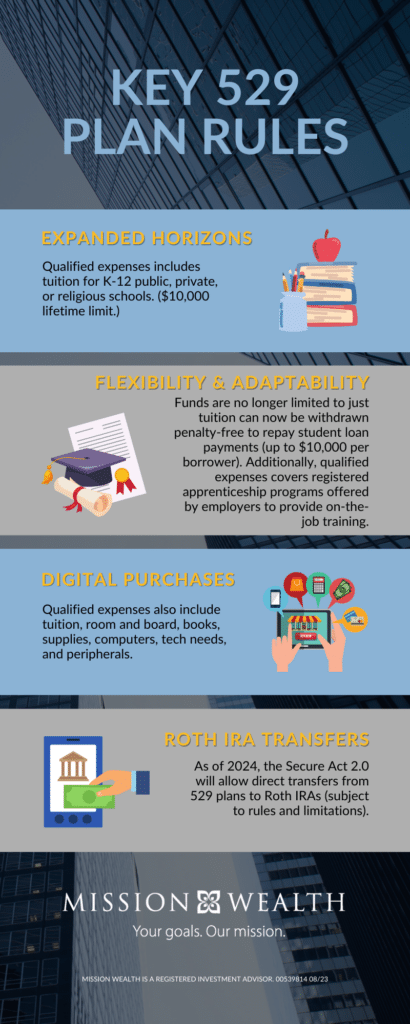
A 529 plan is a tax-advantaged savings plan designed to help families save for education expenses. Traditionally, these plans were primarily associated with college education, but recent updates have broadened their scope. Just like how you experience different subjects and your knowledge base expands as you progress through school, 529 plans have advanced forward as well. Here’s how some of the rules compare to some of the courses you’d find in school today.
When a child turns 18, they legally become adults, and parents or guardians no longer have automatic access to their financial, medical, and legal matters. Just as they symbolically turn the tassel on their cap at graduation, turning 18 represents their transition into adulthood and being in charge of their own affairs. This transition can present challenges, especially when it comes to managing financial affairs. This is where Power of Attorney documents come into play.
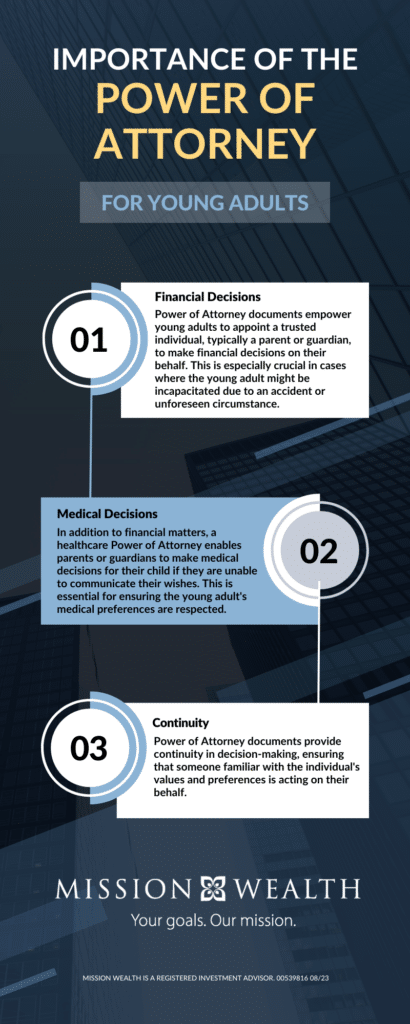 Importance of the Power of Attorney (POA) for Young Adults
Incorporating the new 529 plan rules into your wealth management strategies can significantly benefit young graduates, offering them enhanced options for funding education-related expenses. Simultaneously, emphasizing the importance of creating power of attorney documents for young adults turning 18 showcases your commitment to helping them become successful and educated community members.
Mission Wealth can assist by addressing both the future educational needs and the legal and financial challenges that come with adulthood, and you can provide comprehensive support to your loved ones in navigating their own financial journey. Part of Mission Wealth’s Estate Planning services includes estate plan document drafting. This software is perfect for simple file creations such as power of attorney documents. Contact us today to get started with your family’s holistic financial and estate plan.
Estate Planning for Your High School Graduate
A Parent-Student Contract: Monitoring Your Kids in College
Important Financial Lessons for Your High School and College Age Kids
Mission Wealth is a Registered Investment Adviser. This commentary reflects the personal opinions, viewpoints, and analyses of the Mission Wealth employees providing such comments. It should not be regarded as a description of advisory services provided by Mission Wealth or performance returns of any Mission Wealth client. The views reflected in the commentary are subject to change at any time without notice. Nothing in this commentary constitutes investment advice, performance data, or any recommendation that any particular security, portfolio of securities, transaction, or investment strategy is suitable for any specific person. Any mention of a particular security and related performance data is not a recommendation to buy or sell that security. Mission Wealth manages its clients’ accounts using a variety of investment techniques and strategies, which are not necessarily discussed in the commentary. Investments in securities involve the risk of loss. Past performance is no guarantee of future results.
KEY TAKEAWAYS
Recent changes under SECURE Act 2.0 have significantly expanded 529 plan flexibility, including coverage for K-12 expenses, student loan repayment, and the ability to transfer unused funds to a Roth IRA starting in 2024. Additionally, once a child turns 18, establishing power of attorney documents for healthcare and finances becomes critical, as parents lose automatic legal authority over their adult child’s affairs. These updates create valuable planning opportunities for families navigating education funding and young adult preparedness.
Schedule a complimentary 30-minute discovery call to discuss your unique situation and financial goals.

"*" indicates required fields
By providing a telephone number and submitting the form, you are consenting to be contacted by SMS text message and agreeing to our privacy policy and disclaimers. Message frequency may vary. Message and data rates may apply. Reply STOP to opt out of further messaging. Reply HELP for more information.

Client Development Advisor
or call us: 805-902-4550
"*" indicates required fields
Schedule a complimentary 30-minute discovery call to discuss your unique situation and financial goals.
Prefer a phone call? Call us: 805-902-4550
For general inquiries: click here.
By providing a telephone number and submitting the form, you are consenting to be contacted by SMS text message and agreeing to our privacy policy and disclaimers. Message frequency may vary. Message and data rates may apply. Reply STOP to opt out of further messaging. Reply HELP for more information.