



The intent of Asset Allocation within portfolio design is to identify the right ‘mix’ of investments that align with your financial goals. It is the portfolio allocation across stocks, bonds, cash, and other assets such as real estate. Well-designed portfolios help produce more consistency in returns.

Asset allocation is a tool that allows you to minimize your losses whilst still benefiting from potential gains, by spreading out any risk. But what is asset allocation and how can you effectively use it? Click the video below from Chief Investment Officer Kieran Osborne, or read the text beneath it to learn more.
At Mission Wealth, we design portfolios with target asset allocations that provide an appropriate level of risk and return based upon your personal financial plan and your risk tolerance.
Portfolio design – the allocation across asset classes – is the single largest determining factor in portfolio returns, with studies showing it contributes over 91% of the total return on a portfolio.
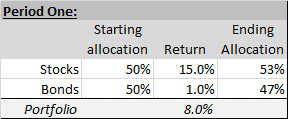
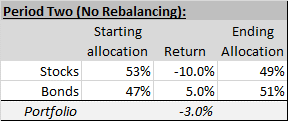
At the broadest level, asset allocation can be thought of as the split between stocks and bonds. Stocks tend to be more growth-oriented and volatile, meaning they experience larger swings in value, both up and down, whereas bonds tend to act as an anchor of the portfolio, providing more stability and also providing a relatively consistent income yield.
Historically, stocks and bonds have often moved in opposite directions to each other, particularly during stock market sell-offs, so having a dedicated allocation to core bonds may help protect against large market downswings and ultimately produce more consistency in returns from one period to another.
The chart below illustrates how a well-diversified asset allocation can produce more consistent returns over time. Let’s examine a full 10-year cycle. This one is from 2008 through to 2017.
It represents a time period that encompasses both good and bad years, which is fairly typical for how things tend to unfold for investments. Sometimes we do experience longer stretches of up or down markets, but this is a good example that has a mixture of returns. This data specifically uses index returns as a measure of how various asset classes performed.
Each colored square represents the annual performance of an asset class over a 10-year period, and includes the Great Financial Crisis of 2008. Asset classes are ranked annually from best-performing to worst-performing. The purple highlighted boxes represent a portfolio comprised of 60% stocks and 40% bonds.
The first observation is that this portfolio is never the best performer, but also never the worst. It consistently ranks in the mid-to-top end of the pack, year in and year out.
In 2008, bonds were the best-performing asset class, returning 5%, while stocks experienced significant declines across the board. As you can see, a diversified portfolio helped mitigate the negative stock market returns in 2008.
In 2009, stocks reversed course and rallied significantly, while bonds trailed and were the worst-performing asset class. In this instance, the portfolio comprised 60% stocks and 40% bonds, participating in the upside of stocks and outperforming bonds.
The reality is that the performance of each individual asset class can differ significantly from one period to the next. However, a well-designed portfolio, allocated across various asset classes, can yield much more consistent results.
Indeed, over the 10-year period illustrated, the same portfolio, which comprised 60% stocks and 40% bonds, produced about three-quarters of the return of the S&P 500, but with about 60% of the risk.
We also highlight the 10-year performance of other portfolios, ranging from 20% stock exposure to 80% stock exposure. You can see that they consistently rank in the mid-to-top end of the pack.
Finding the right mix, or asset allocation, is a critical step in ensuring your portfolio performs in alignment with your risk tolerance and produces more consistent returns on the way to achieving your long-term financial goals.
If you’d like to learn more about incorporating asset allocation benefits into your portfolio, please contact our experienced and dedicated team.
Mission Wealth is a Registered Investment Adviser. This document is solely for informational purposes. Advisory services are only offered to clients or prospective clients where Mission Wealth and its representatives are properly licensed or exempt from licensure. Past performance is no guarantee of future returns. Investing involves risk and possible loss of principal capital. No advice may be rendered by Mission Wealth unless a client service agreement is in place. California Insurance License # 0D35068.
00368735 06/20
Mission Wealth is a Registered Investment Adviser. This commentary reflects the personal opinions, viewpoints, and analyses of the Mission Wealth employees providing such comments. It should not be regarded as a description of advisory services provided by Mission Wealth or performance returns of any Mission Wealth client. The views reflected in the commentary are subject to change at any time without notice. Nothing in this commentary constitutes investment advice, performance data, or any recommendation that any particular security, portfolio of securities, transaction, or investment strategy is suitable for any specific person. Any mention of a particular security and related performance data is not a recommendation to buy or sell that security. Mission Wealth manages its clients’ accounts using a variety of investment techniques and strategies, which are not necessarily discussed in the commentary. Investments in securities involve the risk of loss. Past performance is no guarantee of future results.
KEY TAKEAWAYS
Asset allocation, the mix of stocks, bonds, and other investments in your portfolio, is the single largest factor in determining returns, contributing over 91% of total portfolio performance. A well-diversified portfolio may never be the best performer in any given year, but it consistently avoids being the worst, producing more stable returns over time. Working with a financial advisor to align your asset allocation with your personal risk tolerance and financial plan is essential for long-term investment success.
Schedule a complimentary 30-minute discovery call to discuss your unique situation and financial goals.

"*" indicates required fields
By providing a telephone number and submitting the form, you are consenting to be contacted by SMS text message and agreeing to our privacy policy and disclaimers. Message frequency may vary. Message and data rates may apply. Reply STOP to opt out of further messaging. Reply HELP for more information.

Client Development Advisor
or call us: 805-902-4550
"*" indicates required fields
Schedule a complimentary 30-minute discovery call to discuss your unique situation and financial goals.
Prefer a phone call? Call us: 805-902-4550
For general inquiries: click here.
By providing a telephone number and submitting the form, you are consenting to be contacted by SMS text message and agreeing to our privacy policy and disclaimers. Message frequency may vary. Message and data rates may apply. Reply STOP to opt out of further messaging. Reply HELP for more information.