



Ongoing developments in the Middle East have intensified geopolitical tensions and understandably raised questions about potential implications for financial markets. Our well-constructed, broadly diversified portfolios are designed specifically for times like these—to help navigate periods of uncertainty by spreading risk across asset classes, sectors, and geographies.
We continue to monitor developments closely, but our core philosophy remains unchanged: stay invested, remain diversified, and focus on long-term objectives rather than reacting to short-term market noise.
Today’s (3/9/2026) market action is a good example of the whipsaw effects we often see during periods of geopolitical uncertainty. Oil prices moved more than 13% lower within minutes, while equity markets rebounded significantly. These rapid swings reinforce how difficult it is to time markets based on short-term events and underscore the importance of staying focused on the long-term.
Historically, geopolitical conflicts have created periods of heightened volatility and uncertainty in equity markets. However, history also shows that market reactions to geopolitical shocks have generally been short-lived, with the potential for sharp recoveries as uncertainty begins to ease.
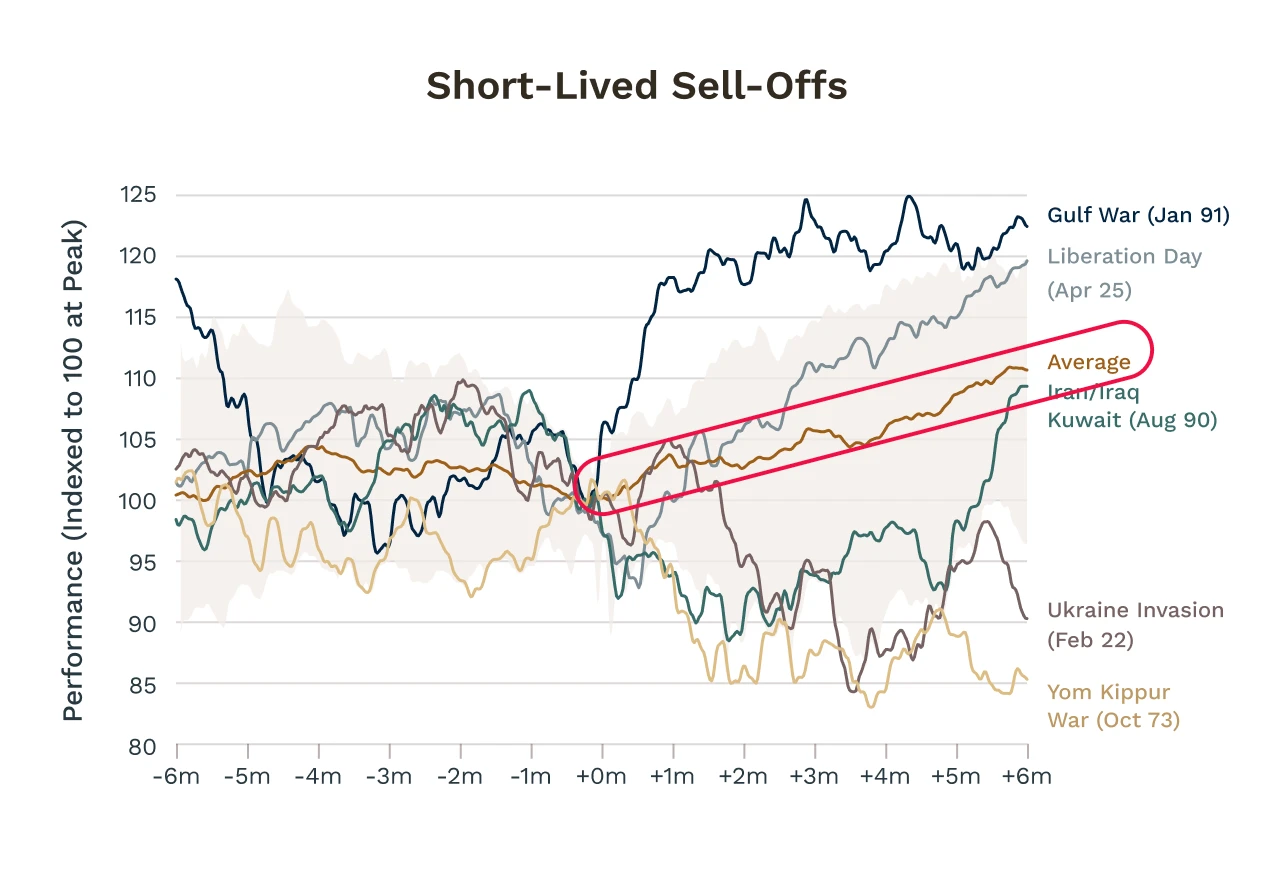
Source: Goldman Sachs Global Investment Research and Goldman Sachs Asset Management, as of January 26, 2026. The chart shows the S&P 500’s performance before and after 15 geopolitical shocks since 1970.
While near-term volatility is always possible during periods of geopolitical stress, maintaining a long-term perspective has historically served investors well. Because geopolitical developments are inherently unpredictable and difficult to time, attempting to adjust portfolios based on short-term headlines can often be counterproductive. In many cases, the stock market’s strongest days occur shortly after its weakest days, and missing those strong days can be extremely detrimental to long-term portfolio performance.
Instead, we believe the most prudent approach is to remain focused on long-term investment fundamentals, maintain well-diversified portfolios, and remain disciplined in our approach to portfolio rebalancing.
We continue to believe our portfolios are well-positioned to navigate the current uncertainty while remaining aligned with the long-term objectives of our clients.
Mission Wealth is a Registered Investment Adviser. This commentary reflects the personal opinions, viewpoints, and analyses of the Mission Wealth employees providing such comments. It should not be regarded as a description of advisory services provided by Mission Wealth or performance returns of any Mission Wealth client. The views reflected in the commentary are subject to change at any time without notice. Nothing in this commentary constitutes investment advice, performance data, or any recommendation that any particular security, portfolio of securities, transaction, or investment strategy is suitable for any specific person. Any mention of a particular security and related performance data is not a recommendation to buy or sell that security. Mission Wealth manages its clients’ accounts using a variety of investment techniques and strategies, which are not necessarily discussed in the commentary. Investments in securities involve the risk of loss. Past performance is no guarantee of future results.
Schedule a complimentary 30-minute discovery call to discuss your unique situation and financial goals.

"*" indicates required fields
By providing a telephone number and submitting the form, you are consenting to be contacted by SMS text message and agreeing to our privacy policy and disclaimers. Message frequency may vary. Message and data rates may apply. Reply STOP to opt out of further messaging. Reply HELP for more information.

Client Development Advisor
or call us: 805-902-4550
"*" indicates required fields
Schedule a complimentary 30-minute discovery call to discuss your unique situation and financial goals.
Prefer a phone call? Call us: 805-902-4550
For general inquiries: click here.
By providing a telephone number and submitting the form, you are consenting to be contacted by SMS text message and agreeing to our privacy policy and disclaimers. Message frequency may vary. Message and data rates may apply. Reply STOP to opt out of further messaging. Reply HELP for more information.